

Best Welding Gloves: Ultimate Top 10 for MIG, TIG, and Stick Work
You’re picking the best welding gloves — ones that won’t melt near sparks, let you grip tools right, and last past your first dozen welds. The real split? Some gloves armor you like a tank — thick, stiff, built for MIG or stick. Others feel like a second skin — thin, bendy, perfect for TIG’s tiny moves. And then there’s the in-between: warmth, wrist coverage, thumb shields. Pick by what job you do most.
Related Article: Best Welding Clamps: 10 Picks for Every Shop and Job

Related Article: Ultimate 10 Best Welding Torch Picks for Every Fuel Type
Best overall: Lincoln Electric K2979 — lined leather and Kevlar stitching hold up day after day in pro shops doing stick or MIG work.
Best for cold shops: Caiman Deerskin MIG — fleece foam lining and 21-inch cuff trap heat when your garage feels like a freezer.
And Best for fine control: Caiman Goat Grain TIG — goat leather plus Kontour shaping lets your fingers move like they’re bare, even near the torch.
If none of those three fit your weld style, keep reading — we broke down ten picks so you don’t grab the wrong pair.
How We Picked
We started with 48 gloves sold on Amazon. To make the cut, each had to name its leather type, state where it’s reinforced, mention heat-resistant stitching (like Kevlar), and say which welding methods it’s meant for. We skipped any that just said “durable” or “heatproof” without backing it up. No glove got in for being flashy — only for spelling out what it’s made of and where it’s built tough. If the listing didn’t say it, we didn’t guess it.
1. Lincoln Electric Traditional MIG/Stick Welding Gloves
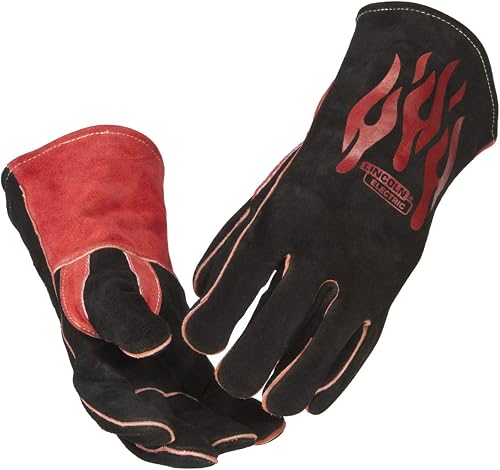
Best for: Daily stick or MIG welders
These gloves are built like shop favorites — split cowhide outside, cotton liner inside, Kevlar seams holding it all together. That combo handles sparks, slag, and long hours without falling apart. The straight thumb and twill cuff keep sweat off and let your hand move naturally, not like you’re wrestling a mitt. Professionals use them daily because the leather resists heat while the liner breathes — no sweaty grip halfway through your shift. Reinforced stress points mean they don’t fray where your fingers bend most. Kevlar stitching won’t burn through when sparks land, unlike polyester thread. But if you’re doing TIG work that needs fingertip precision, these feel bulky. And while the 14” cuff covers your wrist, it stops short of full forearm protection — wear sleeves or jackets over them for overhead work.
2. Black Stallion Unisex Adult Top Grain Leather Cowhide Mig Welding
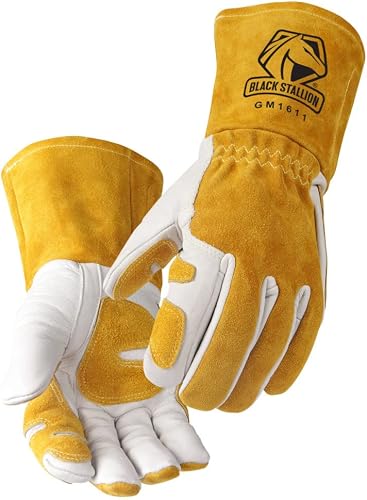
Best for: Heavy grinding or rough metal handling
Cowhide’s tight, dense grain doesn’t just resist sparks — it deflects them, while its natural fiber structure shrugs off scrapes and punctures that shred softer leathers. Reinforced patches on the palm, thumb, and index finger are placed exactly where clamps, grinders, and hot steel chew through gloves. DragPatch side padding absorbs side-to-side friction from dragging tools; RestPatch wrist padding cushions your wrist during long leans or braces against sharp edges. Kevlar stitching won’t melt under torch heat or slag splash, so seams hold even when things get brutal. It’s heavier than precision gloves — you’ll feel that in fine TIG work — but if your gloves usually die mid-shift, this one lasts. Built stitch-by-stitch to take punishment without peeling apart.
Pros:
- Dense cowhide resists punctures
- Padding where wear hits hardest
- Kevlar seams handle the heat levels specified by each manufacturer
Cons:
- Bulkier than TIG-focused gloves
- Less fingertip feel for small welds
3. Caiman Premium Goat Grain TIG/Multi-Task Welding Gloves
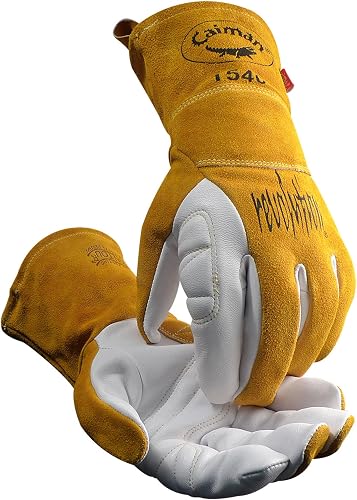
Best for: TIG welders needing fingertip control
Goat leather is thin but tough — it bends easy, molds to your hand, and still blocks sparks. The Kontour shape means no bunching at knuckles or fingertips, letting you feel the torch like an extension of your arm. Split cowhide back adds durability without killing flexibility. If you’re laying fine beads or feeding filler rod by hand, these move with you instead of against you. The combo palm reinforcement and drag patch handle repeated contact with hot surfaces. Patented wrist design locks the glove in place — no slipping mid-bead.
Pros:
- Goat leather = max dexterity
- Kontour fit reduces hand fatigue
- Reinforced palm lasts longer
Cons:
- Not for heavy slag or grinding
- Short cuff leaves forearm exposed
4. Caiman Premium Split Deerskin MIG/Stick Welding Gloves with Fleece/Foam Insulation
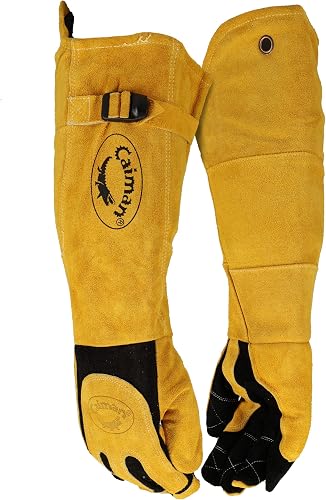
Best for: Cold garages or winter welding
Deerskin’s soft but strong — and paired with fleece foam lining, it traps heat like a sleeping bag for your hands. The 21-inch length covers past your jacket sleeve, so sparks don’t sneak in at the wrist or forearm. Pre-curved fingers and Kevlar seams mean you’re not fighting stiffness while trying to strike an arc or hold a steady bead. Comes with a carabiner clip — no more lost gloves under the bench or buried in tool bins.
Pros:
- Warmest lining here for cold shops — sock-lined foam holds heat without bulk
- Longest cuff blocks falling sparks and seals over sleeves even when you bend your arm
- Pre-curved fingers reduce strain during long sessions; Kevlar thread won’t melt near slag
Cons:
5. Revco GM1611 Top Grain Leather Cowhide MIG Welding Gloves
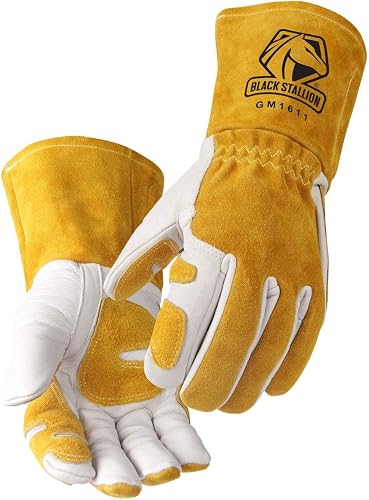
Best for: Palm-heavy MIG work
Reinforced patches sit right where your palm grips the stinger and where your thumb braces the gun. Seamless forefinger means no ridge rubbing raw spots during long runs. DragPatch side padding and RestPatch wrist support spread pressure evenly. Split cowhide back keeps weight down while Kevlar holds every seam tight under heat.
Pros:
- Extra palm/thumb reinforcement
- Seamless index for smooth trigger pull
- Kevlar throughout for heat safety
Cons:
- Cotton liner not insulated for cold
- Not shaped for TIG precision
6. Graywolf Aluminized Gloves
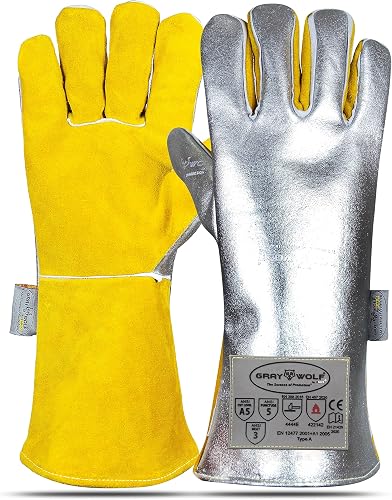
Best for: Foundry, forge, or extreme radiant heat
Aluminized top layer reflects 95% of radiant heat — not just resists it, bounces it back. Certified to EN 11612 for molten metal splash, so it’s built for worst-case sparks. Inside gets 360° Kevlar and foam lining — no exposed seams, no weak zones. Split leather base keeps it flexible enough to grip tongs or hammers without sacrificing protection. If you’re near open flame or pouring metal, this is your shield. Kevlar thread stitches every seam, so they won’t burst under stress or heat. Rated to handle direct contact with molten metal up to 3000°F — not just ambient heat, but splash survival. Foam lining adds comfort without trapping steam or sweat.
Pros:
- Reflects heat, doesn’t just absorb
- Certified for molten splash protection
- Foam/Kevlar full interior lining
Cons:
- Overkill for standard shop welding
- Stiffer than non-aluminized gloves
7. KLEIN TOOLS MIG Welding Gloves
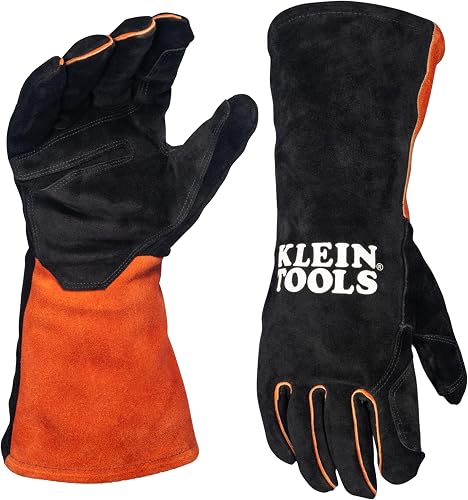
Best for: Thumb-intensive MIG torch handling
Extra leather wraps the thumb base and sides — right where most gloves wear thin from twisting the stinger. That three-sided reinforcement holds up when you’re grinding, adjusting, or repositioning the torch under heat. Wide cuff fits over sleeves, blocking spatter at the wrist without riding up. Flame-resistant fleece lines the whole glove, not just the palm, so your fingers stay protected during long beads. Split cowhide body takes sparks without stiffening up — stays flexible even after repeated exposure. Klein’s known for tool durability — this glove follows suit, stitched throughout with Kevlar aramid thread to resist burnout and seam failure.
Pros:
- Thumb reinforced on three sides
- FR fleece full-hand lining
- Cuff slides over jacket sleeves
Cons:
- Not contoured for TIG finesse
- Lining adds slight bulk
8. YESWELDER Premium Goatskin TIG Welding Gloves
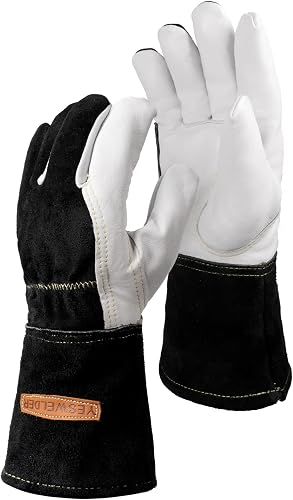
Best for: Goatskin fans on a tight budget
Top-grain goatskin stays soft without breaking in — no stiff leather phase, no waiting. Keystone thumb gives a natural grip angle so your hand doesn’t fight the tool; less pinch, more control when feeding filler rod or balancing a torch. Unlined palm boosts sensitivity where you need it most: fingertip feel for wire starts, subtle torch adjustments. Kevlar stitching holds seams where sparks hit hardest — not just decorative thread, but heat-resistant reinforcement exactly where gloves fail first. Light enough for garden pruning or grill tongs too, if you want one glove that moves from shop bench to backyard without swapping.
Pros:
- Soft goatskin, no break-in needed
- Keystone thumb = better grip angle
- Unlined palm for tactile feel
Cons:
- Less padding for heavy slag
- Not rated for extreme temps
9. Slickman 820 Plus Premium Elk Skin Welding Glove Multi-Task
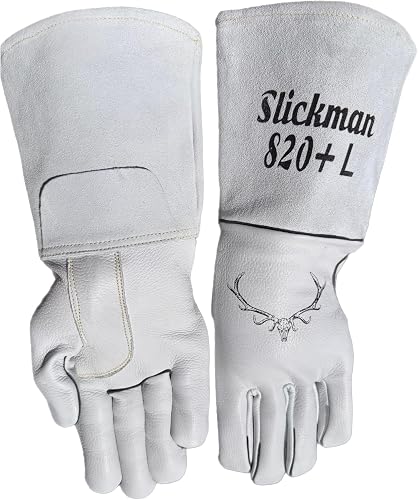
Best for: Multi-task craftsmen switching tools
American elkskin is butter-soft from day one — no stiff period. Welted fingertips protect thread from grinder sparks or sharp edges. Fits snug without squeezing, so chiseling, filing, or TIG work feels natural. If you jump between welding, woodwork, and metal prep, this glove adapts smoothly across tasks.
Pros:
- Elkskin = instant comfort, no break-in
- Welted tips extend seam life
- Snug fit for mixed tasks
Cons:
- No insulation for cold shops
- Not reinforced for heavy MIG
10. Caiman Premium Cow Grain MIG/Stick Welding Gloves
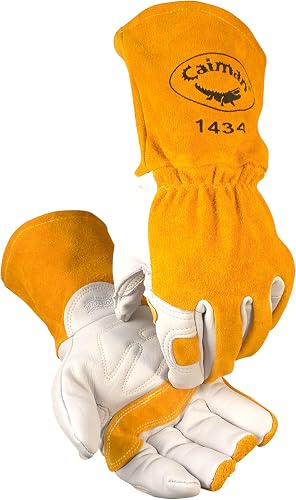
Best for: Stick welders wanting contour fit
Cow grain leather balances toughness and flexibility — durable enough for sparks and slag, supple enough to grip electrodes precisely. The Kontour design molds to your hand’s natural curves, reducing cramping during overhead or extended welds. Scalloped cuff extends protection up the forearm without adding stiffness or weight. Light cotton/fleece lining pulls moisture away but doesn’t trap heat — critical when you’re under a hood for hours. If you hate gloves that feel like oven mitts, this one moves with you, finger to wrist. Reinforced palm patch resists wear from rod handling. Not built for TIG finesse or extreme radiant heat — choose aluminized for that. Less cushion than deerskin, so if you’re grinding right after welding, consider extra padding.
Related Article: Top 7 Best Welding Rods for Flawless Results
How to Choose in Sixty Seconds
Which glove material actually matters for my weld type?
Stick and MIG throw big sparks and slag — go with cowhide or deerskin. They’re tough and handle abrasion well. TIG needs fingertip control — pick goatskin or elkskin. They’re thinner, softer, and bend easier. Don’t force a thick MIG glove into TIG work — you’ll fight your own hand. Match the leather to the job, not the brand. Goatskin gloves like Caiman’s 1540-5 or YESWELDER’s TIG model use unlined palms and keystone thumbs so your fingers move naturally during bead runs. Elkskin, like Slickman’s 820 Plus, requires zero break-in and molds to your grip fast — ideal if you switch between tasks. Cowhide isn’t just “tough” — its dense grain structure deflects sparks and resists punctures, which is why Black Stallion and Revco build their MIG gloves around it. Deerskin, as in Caiman’s 1878-5, adds fleece insulation — critical if you weld outdoors in winter.
Do I need a long cuff or is 5 inches enough?
If you weld overhead, grind after, or work near open flame, get 14+ inches. Sparks fall down — short cuffs leave your forearm bare. For bench TIG or light MIG, 4–5 inches is fine. Just make sure the cuff slides over your jacket sleeve. Gaps = burns. The Caiman Deerskin MIG’s 21-inch length is overkill unless you’re in a foundry — but if sparks rain on you daily, it’s worth it. Klein Tools’ wide cuff fits over sleeves without bulk; Graywolf’s aluminized top reflects heat before it even touches skin. Lincoln’s 14″ gauntlet gives full wrist coverage without sacrificing dexterity. If your work involves leaning into the arc or reaching into hot zones, padding like Black Stallion’s DragPatch and RestPatch absorbs friction and shields your wrist from tool rub.
Should I care about Kevlar stitching or is that marketing?
It’s real. Regular thread melts near 400°F — sparks hit 2,000°F+. Kevlar won’t ignite, drip, or weaken under that heat. Every glove here uses it, because pros demand it. If a listing doesn’t mention Kevlar or “aramid thread,” skip it — the seams will fail first. Graywolf stitches every seam in Kevlar — even inside linings — so no weak points unravel under molten splash. Caiman reinforces stress zones with extra patches sewn in Kevlar thread.
Related Article: Best Multi-Process Welders You Can Buy
Frequently Asked Questions
### What makes a welding glove actually safe versus just thick?
Safety comes from three things named in the listing: leather type (cowhide, goatskin, etc.), stitching material (Kevlar or aramid), and reinforcements (palm, thumb, cuff). Thickness alone traps heat and kills dexterity. A glove that names its materials and where it’s reinforced — like Lincoln K2979 or Graywolf — tells you what it’s built to survive. One that just says “heavy duty” doesn’t.
### Do I need to break in welding gloves or can I weld right away?
Depends on the leather. Goatskin (Caiman TIG, YESWELDER) and elkskin (Slickman) are soft from day one — no break-in. Cowhide and deerskin (Lincoln, Black Stallion, Caiman MIG) start stiffer but soften with use. If you hate stiff gloves, pick goat or elk. If you want max durability upfront, cowhide’s your bet — just expect a week of bending before it feels natural.
### What part of a welding glove wears out first?
Palm and thumb — always. That’s where you grip the torch, rest your hand on hot metal, or brace against a grinder. Gloves that reinforce those spots (Revco GM1611, Klein Tools MIG) last longer. Stitching fails next — unless it’s Kevlar. If a glove doesn’t say where it’s reinforced or what thread it uses, assume those are the weak points.
### Is the cheapest glove on Amazon good enough for occasional welding?
If it names its leather, stitching, and reinforcements — maybe. If it just says “heat resistant” or “durable” — no. Occasional welders still face 3,000°F sparks. A glove that hides its specs won’t protect you. Tillman Goatskin TIG gloves (also worth considering) list grain leather and 4-inch cuffs — that’s enough info to trust.
Related Article: The Ultimate Welding Tools for Beginners
Conclusion
Grab the pair that fits your usual work—don’t overthink it. You’ll break ‘em in, scuff ‘em up, and they’ll feel like yours soon enough. Just get welding; the right gloves’ll prove themselves when sparks fly, and your hands stay sure.
Related Article: Top 9 Best Welding Helmets for Welding Safely
You may also read: Best Welding Tools Every Welder Must Keep in Their Toolbox


You May Also Like

Top 9 Best Welding Helmets of 2026 for Welding Safely
Top 7 Best Welding Rods for Flawless Results